

Understanding facial thirds is one of the fastest ways to objectively analyze attractiveness, symmetry, and facial harmony. If you’ve ever wondered why some faces look balanced and others don’t, this is the framework professionals use.
This guide covers everything:
- Facial thirds meaning
- Facial thirds ratio
- How to measure facial thirds
- Facial thirds test (DIY)
- Facial thirds vs fifths
- How to fix imbalances (looksmax + orthodontics)

What Are Facial Thirds? (Facial Thirds Meaning)

Facial thirds divide your face vertically into 3 equal sections:
- Upper third – hairline to eyebrows
- Middle third – eyebrows to base of nose
- Lower third – base of nose to bottom of chin
The ideal facial thirds ratio is 1 : 1 : 1.
When these thirds are balanced, your face appears:
- More symmetrical
- More proportional
- More visually attractive
When they are not, the imbalance is often noticeable even if people cannot explain why.
Why Facial Thirds Matter (Looksmax Perspective)
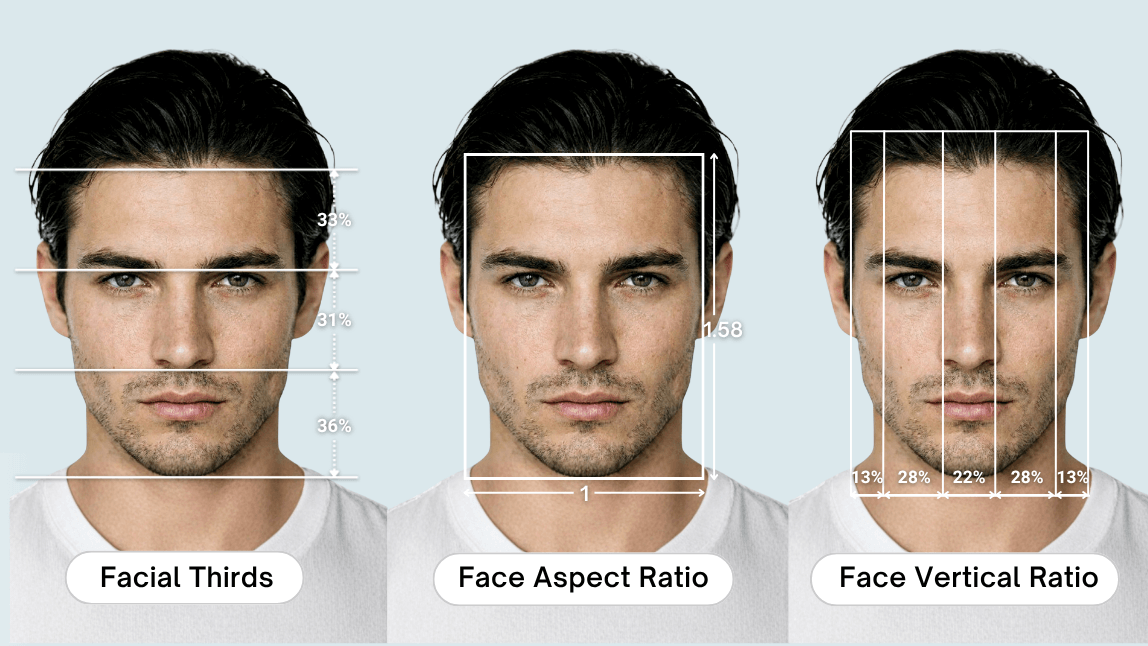
Facial thirds are a core component of objective facial analysis and are widely used in aesthetics.
How each third impacts perception:
- Long midface → often reduces attractiveness
- Short lower third → weak chin or recessed jaw appearance
- Large upper third → high forehead (can be neutral or negative depending on context)
Most common imbalance: midface being too long relative to the rest of the face.
Facial Thirds Ratio Explained
The ideal is simple:
- Upper = Middle = Lower
In reality, variation exists. What matters is degree.
| Ratio Issue | What It Means | Perception |
|---|---|---|
| Long midface | Middle third larger than others | Less balanced appearance |
| Long lower third | Strong chin/jaw | More masculine |
| Short lower third | Weak chin | Softer appearance |
| Large upper third | High forehead | Depends on styling |
Small deviations are normal. Large differences create visible imbalance.
Facial Thirds Measurement (Step-by-Step)

You can measure facial thirds accurately with a simple method.
Key Landmarks:
- Hairline (trichion)
- Glabella (between eyebrows)
- Subnasale (base of nose)
- Menton (bottom of chin)
Steps:
- Take a straight-on photo with a neutral expression
- Draw horizontal lines at each landmark
- Measure the distance between each section
Example:
- Upper: 65
- Middle: 80
- Lower: 70
In this case, the midface is dominant.
Facial Thirds Test (Quick Self-Assessment)
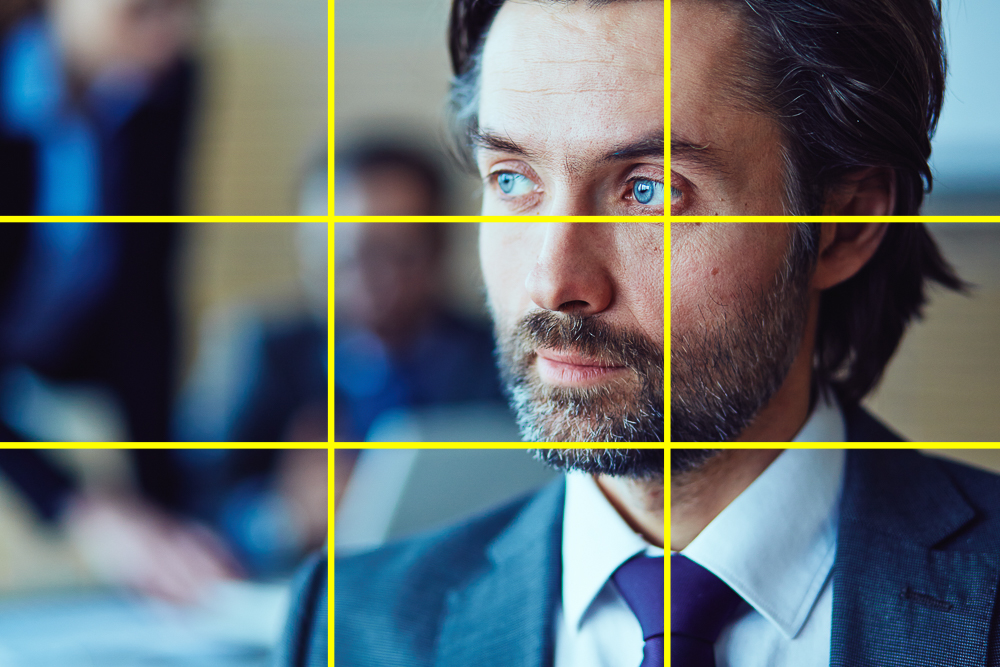
You can quickly assess your facial thirds in three ways:
Mirror Test
Look straight ahead and visually divide your face into three sections. Identify which looks largest.
Photo Test
Use a selfie and draw horizontal lines. Compare the sections.
Measurement Test
Measure pixel distances for accuracy.
If one section is clearly larger, that is your primary imbalance.
Facial Thirds vs Facial Fifths
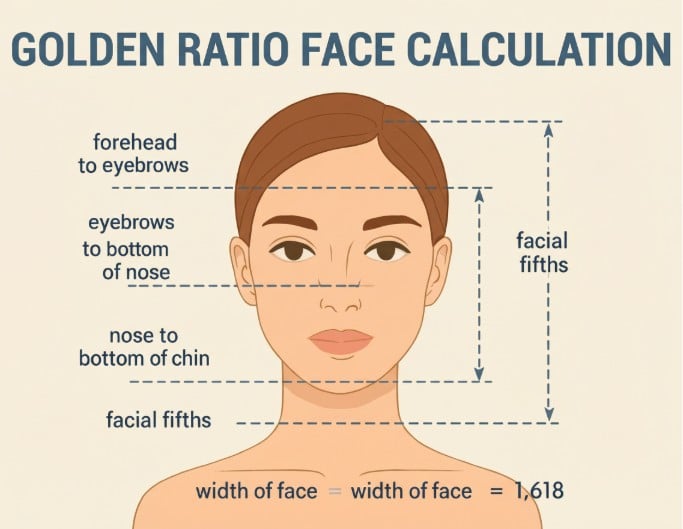
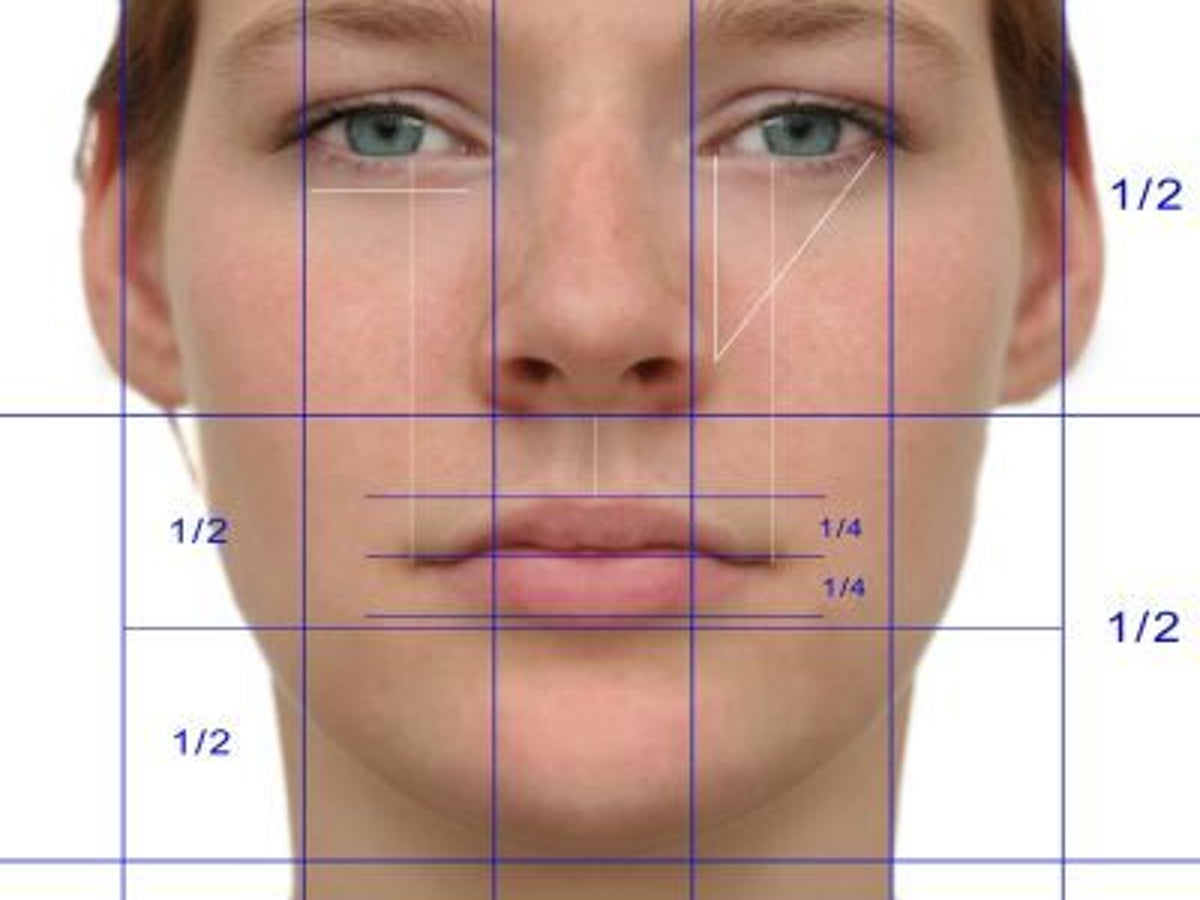
Facial thirds measure vertical proportions.
Facial fifths measure horizontal proportions.
Facial Fifths Overview:
- Face width is divided into five equal parts
- Each eye should take up one fifth
- Distance between eyes equals one eye width
Balanced faces typically have both well-proportioned thirds and fifths.
Facial Thirds in Orthodontics and Aesthetics

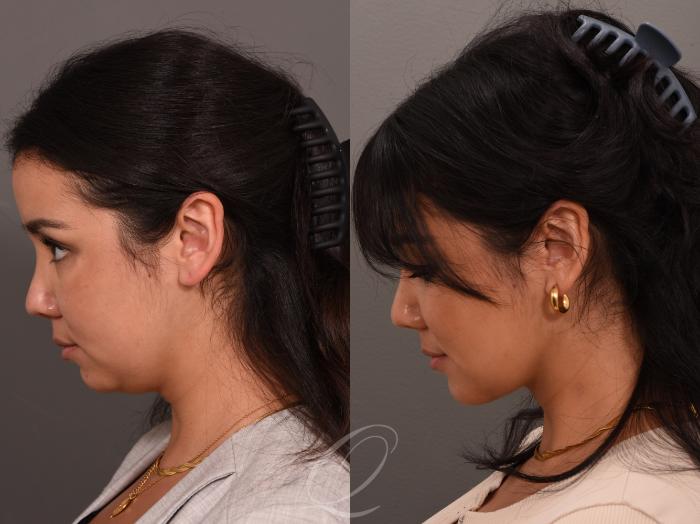
Facial thirds are used clinically in orthodontics and facial aesthetics.
Common Corrections:
Long midface
- Limited non-surgical options
- Surgical: maxillary advancement
- Visual: beard for balance
Weak lower third
- Chin filler or implant
- Jaw surgery
- Minor improvement through posture
Large upper third
- Hairstyle adjustments
- Hairline procedures
Most improvements come from correcting perceived imbalance rather than changing everything.
How to Improve Your Facial Thirds
Non-Surgical
- Beard to enhance lower third
- Hairstyle to reduce upper third
- Fat loss for sharper structure
- Posture improvements
Moderate Interventions
- Dermal fillers (chin, jaw)
- Botox for subtle adjustments
Surgical Options
- Orthognathic surgery
- Chin implants
- Hairline lowering
Common Mistakes
- Focusing only on symmetry
- Ignoring midface length
- Overemphasizing the jaw
- Using angled or distorted photos
Always evaluate using a neutral, front-facing image.
Final Verdict
Facial thirds are one of the most important frameworks for understanding facial balance.
Once you understand this:
- You can identify your main imbalance
- You stop guessing what to fix
- You focus on the highest-impact improvements
Most people only need to correct one dominant issue.
Related Guides
- https://looksmaxxingwiki.com/psl-looksmax/
- https://looksmaxxingwiki.com/hunter-eyes-looksmax/
- https://looksmaxxingwiki.com/maxilla-looksmax/
- https://looksmaxxingwiki.com/gonial-angle-guide/
- https://looksmaxxingwiki.com/chad-lite/